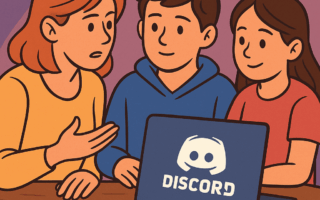
Digital curfews are becoming more common in families, schools, and even at government level.
No phones after a certain time.
Apps blocked overnight.
Strict limits on daily usage.
For many parents, this feels reassuring. It creates structure, reduces screen time, and helps children disconnect.
But there is something important we need to acknowledge.
Digital curfews control access. They don’t teach understanding.
And in today’s digital world, understanding is what truly keeps children safe.
If you’re wondering whether digital curfews actually work, you can read my full breakdown here:
👉 Do Digital Curfews Really Protect Children Online?
Why Curfews Feel Like the Right Solution
It makes sense that parents turn to curfews.
They are simple to implement.
They create immediate results.
They reduce exposure, at least temporarily.
And yes, they can support:
- better sleep
- less overuse
- clearer boundaries
These are all positive outcomes.
But curfews only address when children are online.
They don’t prepare them for what happens when they are.
The Gap Most Parents Don’t See
A child can spend just 20 minutes online and still encounter something they don’t understand or know how to handle.
That’s the gap.
Because the real risks of social media are not about time alone.
They are about:
- interactions
- content
- influence
- and emotional impact
Without guidance, children are left to navigate these on their own.
1. How to Handle What They See
Children are exposed to more than we often realise.
Even in a short amount of time, they can come across:
- inappropriate content
- unrealistic lifestyles
- harmful trends
A curfew does not prepare them for that moment.
When something confusing or upsetting appears, what matters is not how long they were online, but whether they know how to respond.
2. How to Respond to Peer Pressure
Social media is not just about content. It is about people.
Children face messages like:
- “Everyone else is on it”
- “Just send it, it’s private”
- “Why are you the only one not doing it?”
These situations require confidence and decision-making.
Curfews don’t teach children how to say no or how to handle pressure from friends.
3. How to Protect Their Privacy
Privacy is one of the most misunderstood aspects of social media.
Children often don’t realise:
- how much data they are sharing
- how quickly information spreads
- how permanent digital footprints can be
Limiting access does not build awareness.
And once access increases, the risks increase too.
4. How to Manage Their Emotions Online
Social media can trigger strong emotional responses.
Comparison.
Exclusion.
The need for validation.
These experiences can happen quickly, even within minutes.
Curfews don’t teach children how to process these feelings or how to step back when something affects them.
5. How to Think Critically About What They See
Not everything online is real.
Edited images, filtered lives, and misleading content are everywhere.
Children need to learn how to question what they see.
Without this, they may:
- compare themselves unfairly
- believe unrealistic standards
- or trust content that is not accurate
Curfews don’t build critical thinking.
What Happens When the Limits Are Removed
This is where many families struggle.
A child grows up with strict limits.
Then one day, those limits are relaxed.
And suddenly, they are navigating a complex digital world without the tools to do so safely.
They may feel:
- overwhelmed
- curious
- influenced
Because they were controlled, but not prepared.
A More Effective Approach
Curfews can still play a role.
But they should be part of a broader approach, not the only strategy.
Children need:
- ongoing conversations
- clear explanations of risks
- guidance, not just rules
- a safe space to ask questions
In my work with families and through my book Keeping Families Safe on Social Media, I’ve seen that the children who cope best online are the ones who feel supported, not just restricted.
They know they can come to their parents.
And that changes everything.
Shifting the Question
Instead of asking:
“How long should my child be online?”
Ask:
“Is my child ready for what they might experience online?”
This shift is powerful.
Because eventually, children will have access.
And when they do, what they understand matters far more than what was previously limited.
Final Thought
Digital curfews can protect time.
But they don’t teach awareness, confidence, or decision-making.
And those are the skills that truly protect your child.
Support for Parents
If you want practical, step-by-step guidance to help your child stay safe online, you can download my free guide:
👉 9 Essential Steps to Safeguard Your Family’s Social Media Presence
https://www.safefamilyonsocialmedia.com/9tips
👉Learn more in my book Keeping Families Safe on Social Media https://www.safefamilyonsocialmedia.com/infonow
You’ll learn how to set boundaries, start meaningful conversations, and build real digital confidence in your child.